




Be Mindful Of People With These Personality Traits: What Is The Dark Triad, And What Can You Do?
Table of Contents
Some people leave you feeling confused, used, belittled, or strangely drained. They may be charming at first, persuasive under pressure, and very good at getting what they want, but something in the relationship keeps feeling off.
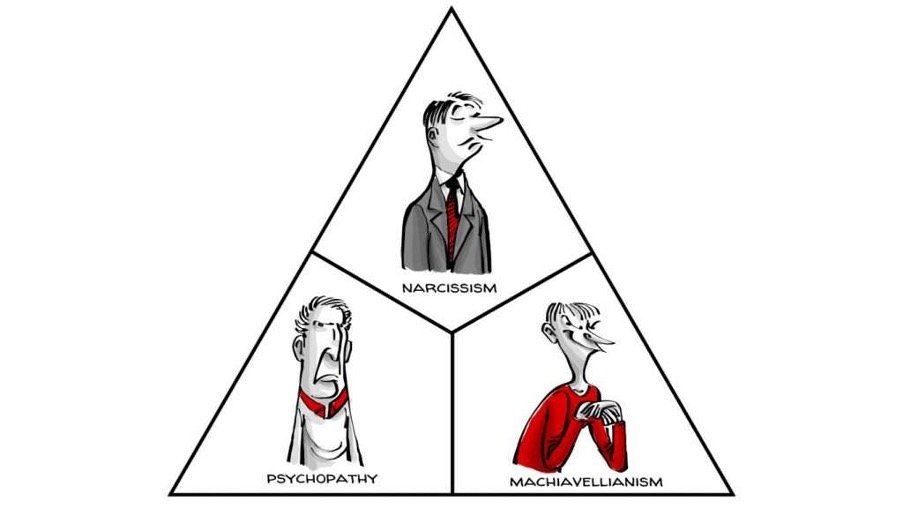
Psychology has a term for a particular cluster of socially aversive traits that can show up in everyday life: the Dark Triad. It refers to three personality traits: narcissism, Machiavellianism, and psychopathy. These are not used here as diagnostic labels. In this context, they refer to subclinical personality traits, meaning patterns that may be present in ordinary social and professional life without amounting to a mental disorder.
That distinction matters. The aim is not to turn every difficult person into a diagnosis. It is to understand patterns of behaviour that can be manipulative, self-serving, and at times harmful.
What is the Dark Triad?
Workplace bullying is not always obvious. It is not always shouting, threats, or obvious aggression. Quite often, it is actually subtle.
Bullying can look like repeated disrespect. It can look like someone refusing to complete tasks, delaying responses, withholding information, or constantly challenging instructions. It can also show up like spreading rumours and gossip, exclusion, and small but repeated attempts to damage someone’s credibility.
The Three Personality Traits Explained
1. Narcissism
Machiavellianism is the cold, strategic side of the trio. It is associated with manipulation, exploitation of others, self-interest, and the belief that the end justifies the means. These individuals may be calculating rather than impulsive. They can appear calm, politically astute, and highly controlled, while quietly taking advantage of other people in their benefit.

2. Machiavellianism
The second is horizontal bullying. This happens between colleagues of the same level. One peer targets another through exclusion, aggression, belittling, or other hostile behaviour. In some workplaces, this is normalised as “personality clashes” or “team dynamics”, when in fact the behaviour is persistent, targeted, and damaging. Peer bullying is often easier to dismiss because there is no formal hierarchy involved, but that does not make it less serious.Workplace conflict can easily shift from disagreement to something more persistent and damaging
3. Psychopathy
Psychopathy, in its subclinical form, is associated with impulsivity, lack of empathy, low remorse, and antisocial behaviours. It is the most overtly concerning of the three when it comes to aggression and harmful behaviour. A person high in psychopathic traits may seem fearless, persuasive, and emotionally detached, but may also be reckless with other people’s wellbeing.
Again, this does not mean every emotionally detached person is a “psychopath”. It means that, at the trait level, this profile tends to be less concerned for others and shows poor impulse control.
Why Dark Triad Matters in Real Life
The Dark Triad is not just a curiosity for researchers. These traits have been linked to a range of socially harmful outcomes. Studies have associated them with aggression, bullying, cyberbullying, sexual coercion, trolling on dating apps, workplace rule-breaking, cutting corners, manipulative behaviour, lower empathy, vengefulness, and exploitative interpersonal styles. Psychopathy often appears as the strongest predictor when behaviour becomes more openly aggressive or harmful.
In workplace settings, dark traits have also been connected to counterproductive behaviour, job dissatisfaction, and the pursuit of personal gain at others’ expense. In relationships, they can show up as control, charm without depth, repeated boundary violations, shallow remorse, and a pattern of using people rather than relating to them.
This does not mean everyone high in one of these traits becomes abusive or criminal. It just means these traits increase the risk of harmful patterns, especially when combined with power, stress, opportunity, or lack of accountability. That is a fair inference from the literature you provided
But Why Might Some People Develop These Traits?
It can be tempting to see the Dark Triad simply as a sign that someone is “bad”, selfish or morally flawed. But the picture may be more complicated than that. Some researchers suggest that Dark Triad traits may reflect a fast life strategy. In other words, the person is more focused on short-term rewards such as status, power, control, excitement or quick gains, rather than on long-term trust, cooperation and stability. From this perspective, these traits that might look like socially harmful or wrong, but they might be benefitial in the short-term.
The Problem with Pop Psychology Labels
The Dark Triad has become popular online, but there is a risk in using such specific labels suddenly. Real people are more complicated than a checklist of characteristics.
Even researchers point out that measuring these traits is not straightforward. Some of the most popular short questionnaires overlap too much, especially when trying to distinguish Machiavellianism from psychopathy. Brief tools can be efficient, but they may be overly simplistic.
So, in the end, it is wiser to think in terms of patterns, not closed categories to which a person belongs or not.
Signs That Should Make You Cautious
You do not need to diagnose someone to notice a pattern that is unhealthy. Be cautious when you repeatedly see things like:
- charm that disappears when they no longer need something
- a strong need to win, dominate, or be admired
- frequent lying, or selective honesty
- using guilt, flattery, fear, or confusion to control others
- little genuine remorse after causing harm
- blaming others for everything
- cold calculation behind apparently friendly behaviour
- repeated disregard for boundaries, rules, or consequences
- enjoyment of power without much concern for impact of their actions on others
Don’t miss a word – get weekly psychology insights straight to your inbox
A piece of advice for you, unpublished anywhere else. Miss a Wednesday, miss the insight.
The 5 Things To do if you are dealing with someone With Dark Triad Traits
1. Stop arguing with the fantasy version of them
One of the traps with manipulative people is hoping that if you do things differently, and you give it time, they will change. Sometimes they will not, recognising, and addressing these patterns needs often motivation to change and the right support provided by a mental health professional.
2. Pay attention to patterns, not promises
A grand apology, a confident speech, or a dramatic display of emotion can be persuasive, but what matters more is repeated behaviour over time. Do they take responsibility after being called out on specific behaviours? Or does it all come back to the same dynamic after that big apology?
3. Set clear boundaries
Weak undefined boundaries are easy to push while clear ones are harder to surpass without it being noticed. Be direct. Keep your message simple and do not over-explain. If the pattern is manipulative, long explanations often become openings for further argument. A technique that can help with avoiding this boundary setting converting into an argument is the “Broken Record technique”
4. Keep records where relevant
If this is happening at work, in co-parenting, or in any context where facts may later be contested, document key interactions. Manipulative dynamics often thrive in ambiguity.
5. Get support early
If the relationship is leaving you anxious, confused, ashamed, hypervigilant, or doubting your own judgement, it may be worth speaking to a psychologist. The goal is not to label the other person. It is to help you think clearly, protect yourself, and respond effectively.

What not to do
It is unhelpful to tell someone, “You are a narcissist” or “You are a psychopath.” In most everyday situations that will not promote insight. It will create escalation, defensiveness, or an opportunity for manipulation.
It is also unhelpful to assume that every selfish, arrogant, or emotionally clumsy person fits the Dark Triad. Some people are immature, stressed, insecure, poorly socialised, or simply not very self-aware.
Why you should be careful with labels
The Dark Triad is useful because it gives language to behaviour that many people recognise but struggle to name. It can help explain why some individuals seem charming but are too proud, confident but exploitative of others, socially skilled but also morally careless.
But it should be used carefully. These are personality traits or patterns, not labels to throw at anyone who upsets or mistreats us. Research also shows that the way to measure clearly these traits is still debated as some traits overlap.
You do not need to become an expert in personality science, you just need to be aware of these patterns to recognise them. Often, the question is not, “Does this person meet the technical definition of the Dark Triad?” but rather:
“How do I tend to feel around this person, what patterns repeat, and is this relationship good for me?”
